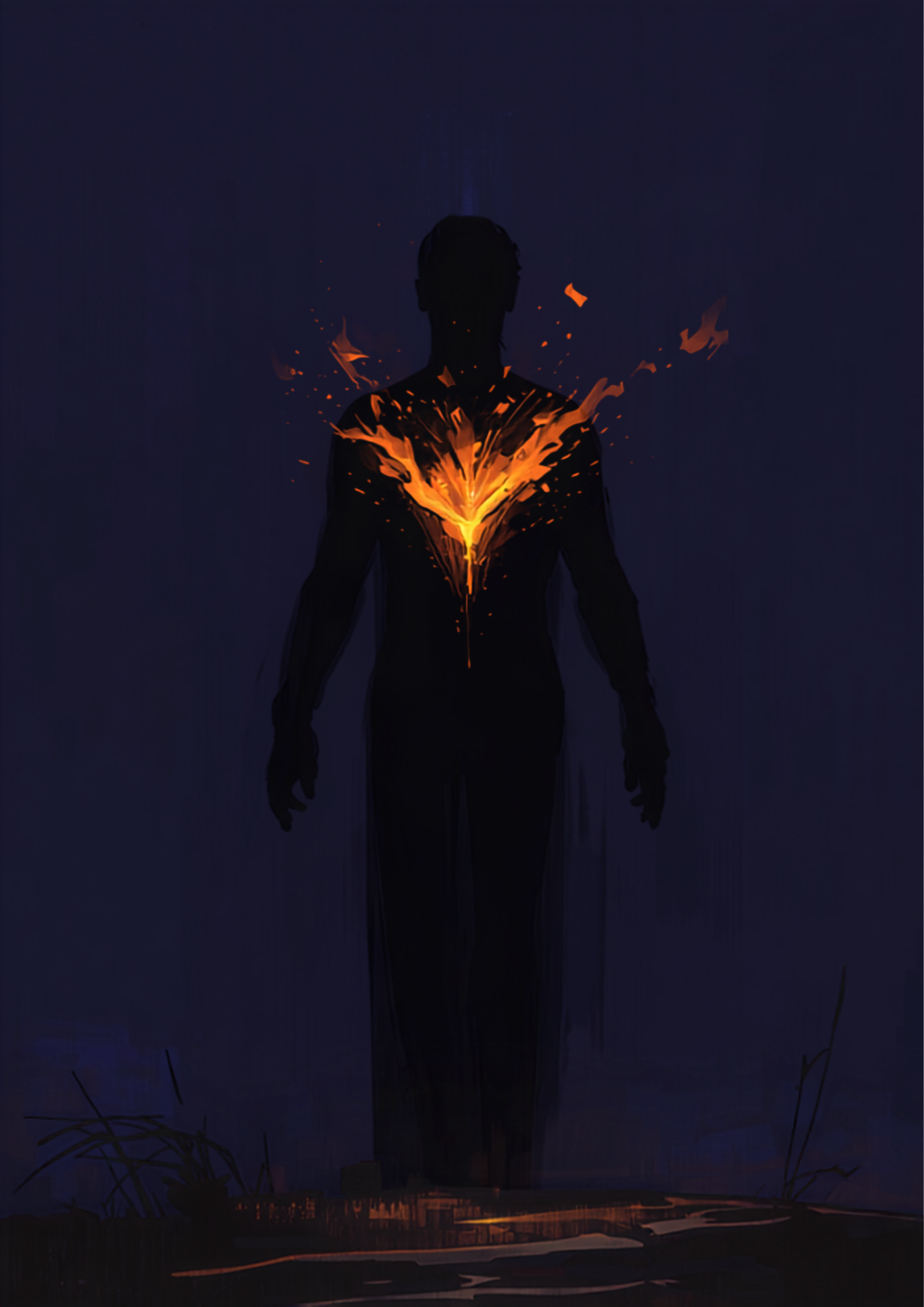
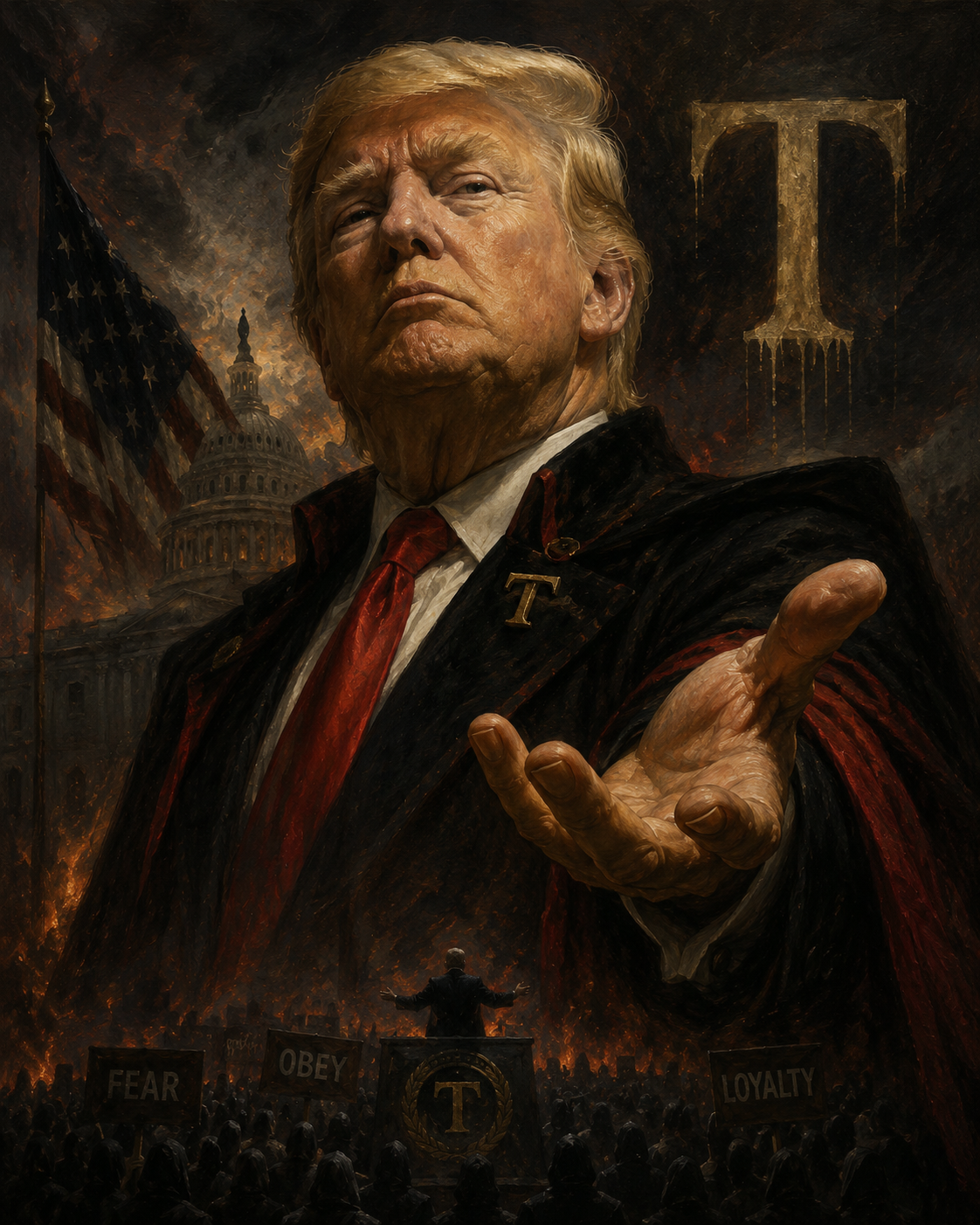
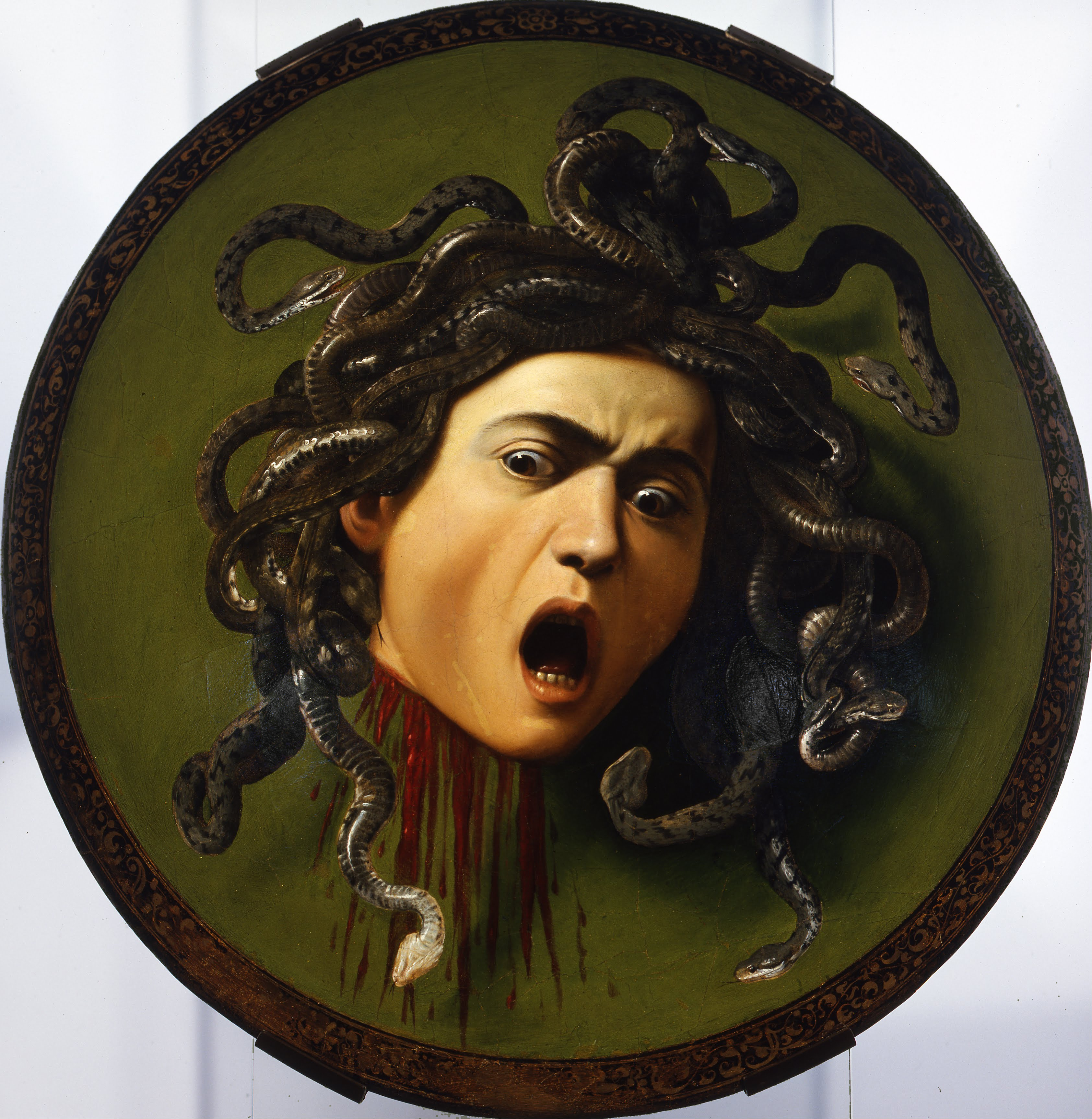
The archetype on the fight pole of the DOT model. Not a verdict on who you are: a
position the body stands in when something true feels like it has no safe place to land. The same
fire that makes an activist unshakeable, a friend fierce in someone else's defense, a person finally
saying the thing the whole room has been circling for an hour.
Challenger
Deepen
Villain is Fight energy: heat, forward press, the urge to name what's wrong before it gets used against you. Deepen means staying with that charge before it becomes a weapon.
Orient
Orient means all six counter qualities coming alive at once (Trust, Curious, Open, Give, Hold, Pause), not one chosen in isolation. Trust is Fight's most direct entry point, the same axis as Vicar's Give from the opposite pole. The practice is holding the charge and its counter together, before the mind picks a side.
Transform
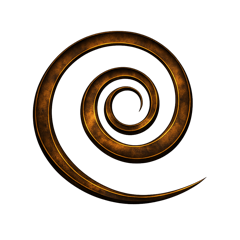
With Trust available, the same fire becomes the Challenger: truth spoken in bite sized pieces, curved toward the center instead of aimed to wound. Its symbol is the spiral.
The same fire, held two ways. More will gather here as people add their own.
Share your own art
However this archetype has shown up for you, in whatever medium you made it in. Shared art is reviewed before it joins the gallery above.
Where it sits
Fight is one of four poles, not a special case. Victim holds flight. Victor holds fix. Vicar holds
freeze. All four are the same nervous system doing what it already knows how to do under pressure,
not four kinds of people. Villain is simply the name for what fight looks like when it's run out of
room to move.
Read differently depending on who's standing in it
The same mild frustration doesn't land the same everywhere. A raised voice from someone the room
already trusts reads as a fair point, strongly made. The identical raised voice from someone the room
already expected to be difficult, too loud, too much, reads as rage before the sentence is even
finished. That gap isn't the feeling escalating. It's the room deciding in advance how much heat a
body is allowed to show before it counts as dangerous, and race, gender, ability, accent, and social
position all shape that math before anyone in the room could tell you why they reacted the way they
did.
The same fire, cast as Villain from both sides
Political division amplifies the same distortion. Whichever side someone is on, the other side's
passion is the part that gets named Villain first, from my own writing on the DOT Model in times
of political upheaval:
Seen through a conservative-coded lens
"Conservatives may view progressive policies as threats to core values, labeling advocates of
change as dangerous or misguided."
Seen through a liberal-coded lens
"Liberals may see those with conservative values as barriers to progress, casting them as
'wrong' or 'backward.'"
Neither side is more right about who the real Villain is. Whether we lean conservative or
liberal, the Villain role expresses the same fundamental human need for security and
acknowledgment. The fire is identical. Only which side gets to name it dangerous changes.
What it feels like
A cascade, not a switch. Each stage is the same signal, louder.
Something feels blocked
Effort without result. Wanting to fix it but feeling thwarted. A clenched jaw, a furrowed brow,
restless limbs, the earliest and easiest place to still choose what happens next.
A boundary feels crossed
Protective and mobilizing, often signaling a deeper hurt or an unmet need underneath it. A
tightening chest, a quickening heartbeat, heat rising through the body.
Anger left unattended
Often explosive, usually tied to older pain. The body's siren: loud, urgent, desperate to be
heard. Shaking limbs, a raised voice, disorientation, the urge to destroy, or to disappear.
Practice: the Villain quest library
Real quests already tagged to this cascade, tied to your own garden, not a separate
exercise.
Loading quests…
When this fire is right
Needs to feel powerful
A villain doesn't feel powerful making the choice to overwhelm, it feels undefended without it.
The body isn't attacking. It believes it's defending something that has no other way to survive,
and often it's right to.
The activist refusing to soften a truth that keeps getting softened into nothing. The friend who
won't let something slide because someone they love got hurt by it. The person in the meeting who
finally names the thing everyone else has been avoiding for an hour. None of that is a villain doing
something wrong. It's the same fight-pole fire, aimed at something worth burning for. What decides
whether it gets called passionate or gets called a problem is usually the field-level casting from
the section above, not the size of the feeling itself.
The shape it takes: a line, or a spiral
Same fire. A different geometry for it to travel through.
One path, straight through whoever is standing in the way. It solves things by breaking the thing
in front of it, all at once, in a single motion.
The same distance covered, point A all the way to Z, through many small turns that keep circling
back to the center: to the relationship, to the people in the room. Every pass hands over one
bite-sized piece of the truth. Never the whole flood at once.
What tends to help the shift: soft shoulders, open hands, a rooted stance, breath low in the
belly. Ask yourself: can I trust that this pain has something to teach me? What other perspective
might I be missing here? How do I share what I need differently? Timing matters more than force:
look for the moment of least resistance, not the moment of most conviction.
None of this means the fire was wrong to begin with. It's a question of delivery, not of guilt.
When what actually happened crossed into real harm, not just discomfort at hearing a hard truth, the
repair path is the same six-letter one used everywhere else here: AMENDS →,
acknowledge, map the impact, express understanding, name what needs repair, demonstrate change, stay
in the conversation. Full detail lives on that page, not repeated here.
Am I naming a real wrong, or making someone pay for how they made me feel?
Do I see someone defending themselves, or someone evolving?
Can I face myself, even if they're not ready to face me yet?
In the model's own words
This page is a written companion. The full DOT model asks and answers this out loud,
voiced, at the exact moment the model itself builds Villain and, later, Challenger. The words below
are quoted directly from that narration, not rewritten for this page.
What kind of person fights?
Through a not enough lens, we would call them the Villain, or the Bully. The one who uses
destructive, non-consenting force to get their way. Frustration, then anger, then rage.
The DOT Model, beat 8
What does fight become?
The Challenger. The one who names a hard truth without breaking the bond. Truth as disruption,
not as exile.
The DOT Model, beat 20
The Villain, across real situations
Drawn from my own Group Creature Cards, a deck built for groups moving through real
ruptures together. Each situation carries all four threat archetypes; this is the Villain's
slice of it, one real moment at a time.
Villain's belief:
The Challenger's question:
Where this comes from
Drawn directly from my own earlier work mapping the DOT model's four threat archetypes and their
flow counterparts, not a new invention for this page.
DOT ArchetypesThe original card set naming Villain, Victim, Victor, and Vicar alongside
Challenger, Creator, Coach, and Connector.
Group Creature Cards23 real-life scenarios, each with the Villain's belief and the
Challenger's counter-question; the source for the situations above.
Bridging the Divide: A Guide to Conflict Resilience and Collective HealingMy own book on
the DOT Model in times of political upheaval; the source for the conservative/liberal framing
above.
"I'm Feeling Like a Villain"A practice guide for the Villain-to-Challenger shift; this
page's body-sensation and step-by-step content comes from it directly.
The AMENDS framework →The condensed repair path above points
here rather than repeating it in full.
One of four threat archetypes and their flow counterparts on the DOT model. This is a
pilot for a fuller set: Victim, Victor, Vicar, and the four flow archetypes, still to come.